Full Stack Development: Build Powerful End-to-End Web Applications
Learn full stack development with powerful tools to build complete web applications.
Learn full stack development with powerful tools to build complete web applications.
Modern digital products depend on seamless collaboration between user interfaces, backend services, databases, and deployment infrastructure. Full stack development brings these technologies together into unified workflows that enable developers to build scalable, secure, and high performance web applications from a single development perspective.
Businesses increasingly prefer developers who understand the complete application lifecycle because integrated knowledge improves communication, accelerates delivery, and simplifies long term maintenance across complex software projects.
Complete skills create flexibility. Strong full stack development transforms ideas into reliable and scalable digital solutions.
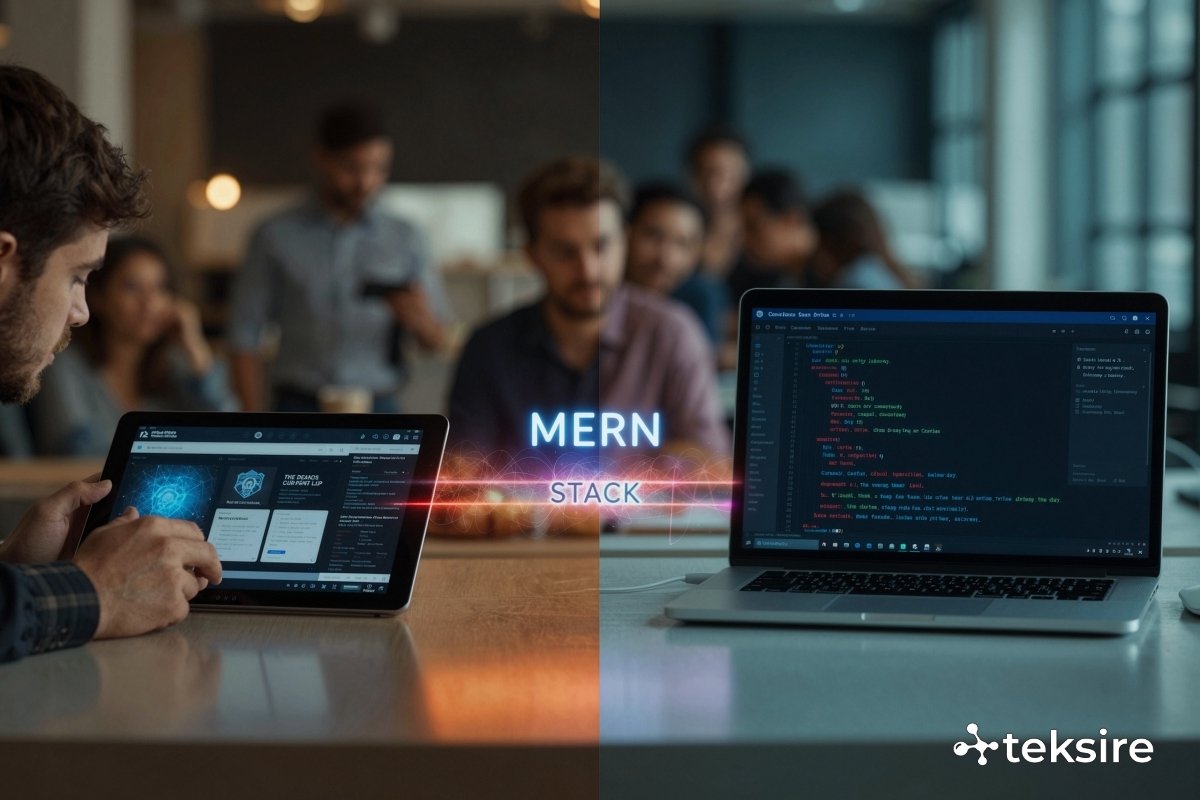
Frontend backend integration connects user interfaces with business logic, databases, and APIs to deliver responsive experiences that process information efficiently while maintaining reliability and security. Every interaction depends on smooth communication between presentation layers and server infrastructure.
Contrast illustrates the importance clearly. Attractive interfaces alone cannot provide meaningful functionality, while robust backend systems require intuitive frontend experiences to deliver value to users across web and mobile platforms.
We create better applications when every layer is designed to work together instead of operating as isolated technical components.
Modern development frameworks simplify application creation by combining frontend libraries, backend runtimes, databases, and server technologies into consistent development environments. MERN and MEAN stack architectures encourage reusable components, organized codebases, and efficient collaboration throughout the software lifecycle.
These technology stacks accelerate development through shared programming languages, modular architecture, and extensive community support, allowing developers to build scalable applications with predictable workflows and maintainable structures.
Our productivity increases when familiar technologies integrate naturally across frontend and backend development tasks.
Databases store application data while APIs provide structured communication between services, clients, and external systems. Efficient integration strategies ensure information remains accurate, accessible, and synchronized across increasingly complex digital ecosystems and business operations.
Well designed APIs simplify expansion by enabling new features and third party integrations without requiring complete architectural redesigns or disruptive modifications to existing functionality.
We should build modular systems because scalable architecture supports continuous improvement and sustainable long term application growth.
A practical full stack roadmap begins with HTML, CSS, JavaScript, and responsive design before expanding into frontend frameworks, backend programming, databases, API development, authentication, deployment, and cloud infrastructure. Structured learning builds confidence while reducing unnecessary complexity.
Insight comes from mastering concepts rather than memorizing frameworks. Developers who understand architecture, debugging, performance optimization, and integration adapt more easily as technologies continue evolving throughout the software industry.
We strengthen technical foundations by building real projects that combine multiple technologies into complete working applications.
Successful full stack projects extend beyond coding into deployment automation, monitoring, version control, security, and performance optimization. Modern engineering workflows integrate testing and continuous delivery to improve software quality while accelerating release cycles.
Cloud infrastructure and scalable deployment strategies ensure applications remain reliable under growing traffic while supporting distributed development teams and continuous feature expansion across multiple business environments.
We should continuously refine development workflows because incremental improvements create significant gains in productivity, maintainability, and operational stability.

The best full stack development practices combine frontend backend integration, database management, API architecture, deployment automation, and scalable coding strategies into efficient workflows that support modern digital products. Comprehensive technical knowledge creates adaptable and reliable software solutions.
Successful developers focus on clean architecture, reusable components, practical problem solving, and continuous learning while selecting technologies that integrate naturally with evolving business requirements and modern engineering standards. Simplicity consistently delivers long term value.
Our investment in full stack development skills should improve collaboration, accelerate software delivery, and strengthen application performance. Powerful end to end development practices enable teams to build secure, scalable, and maintainable web applications prepared for future growth and innovation.